Music
Real Sounds on Real Circuits
Builders at the frontier of hardware in music assemble at the Brooklyn Synth and Pedal Expo to show off their latest work, review written by A. M. Checchia.
October 22, 2026
Every musician knows a gearhead. The guy at the session playing show-and-tell, fiddling with a new pedal, pulling up a new plugin, swearing that when you turn the knob it really makes the low end sound, like, way fatter. They get a bad rap, more interested in the tech than the music, but the best of them always seem to know exactly what a mix needs. They’re the same ones who fixate on sound design problems so specific that they’ll create their own programs and instruments to solve them. So what happens when you get them, the best of the gearheads, in a room together?
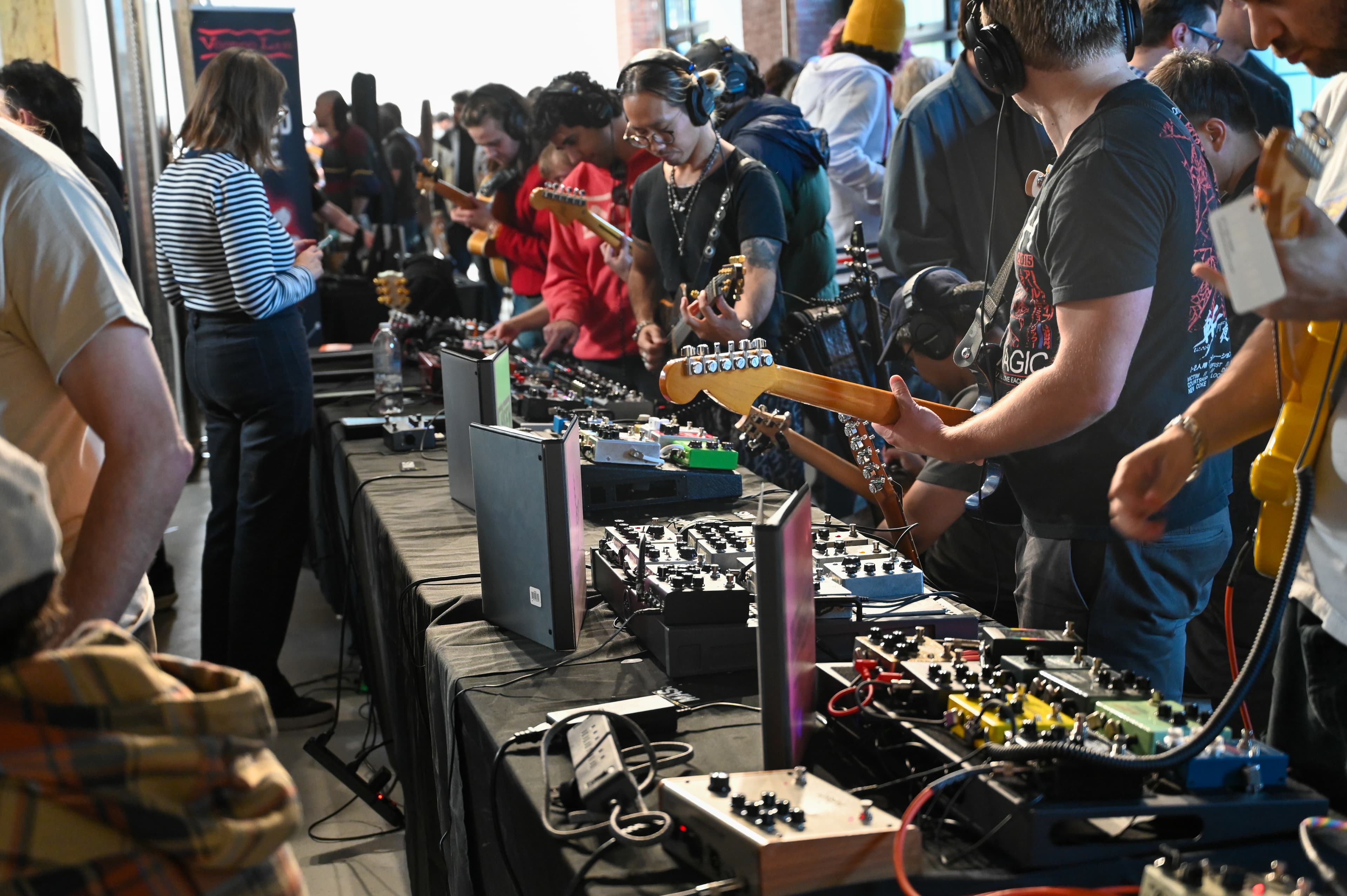
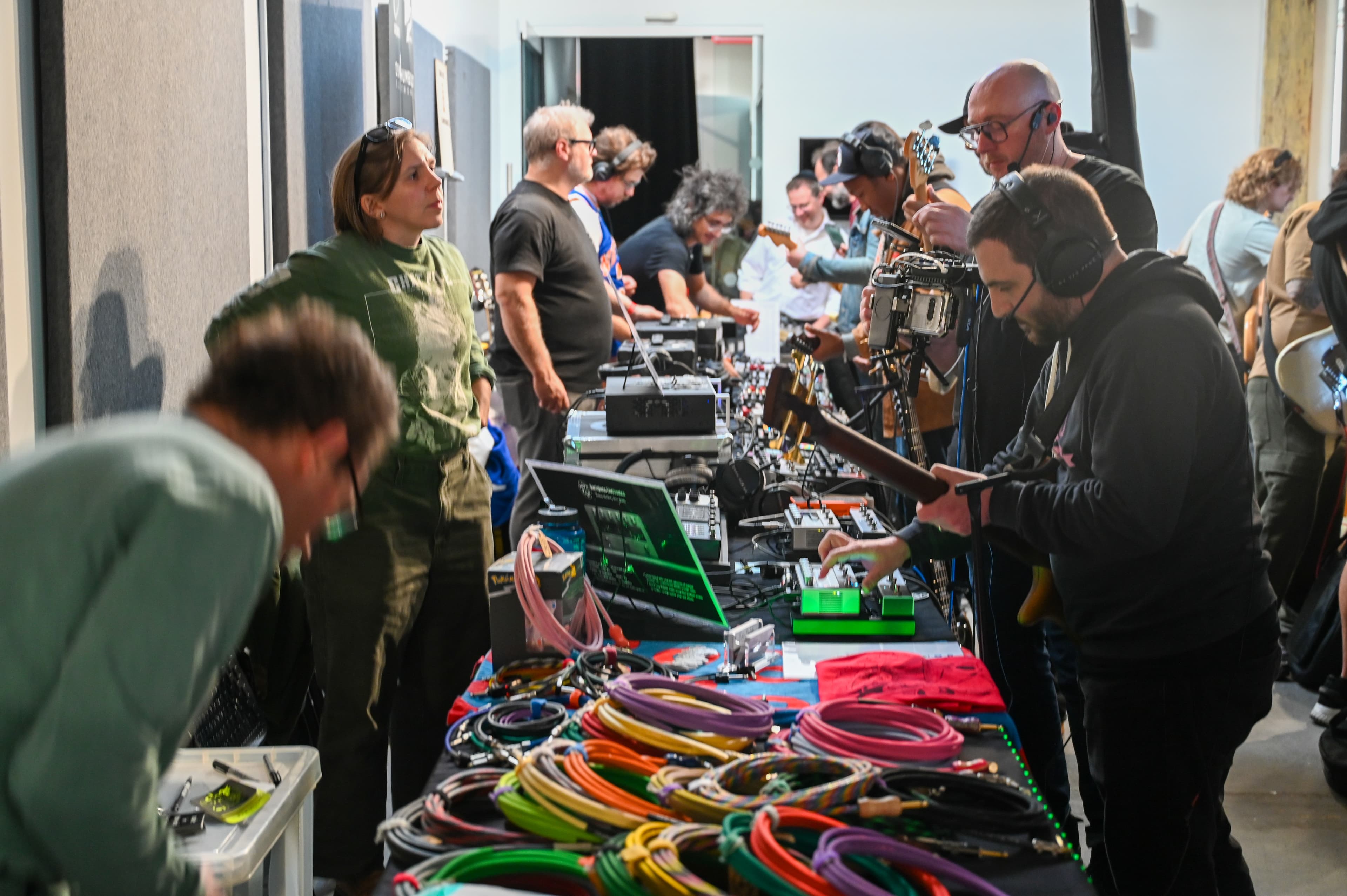
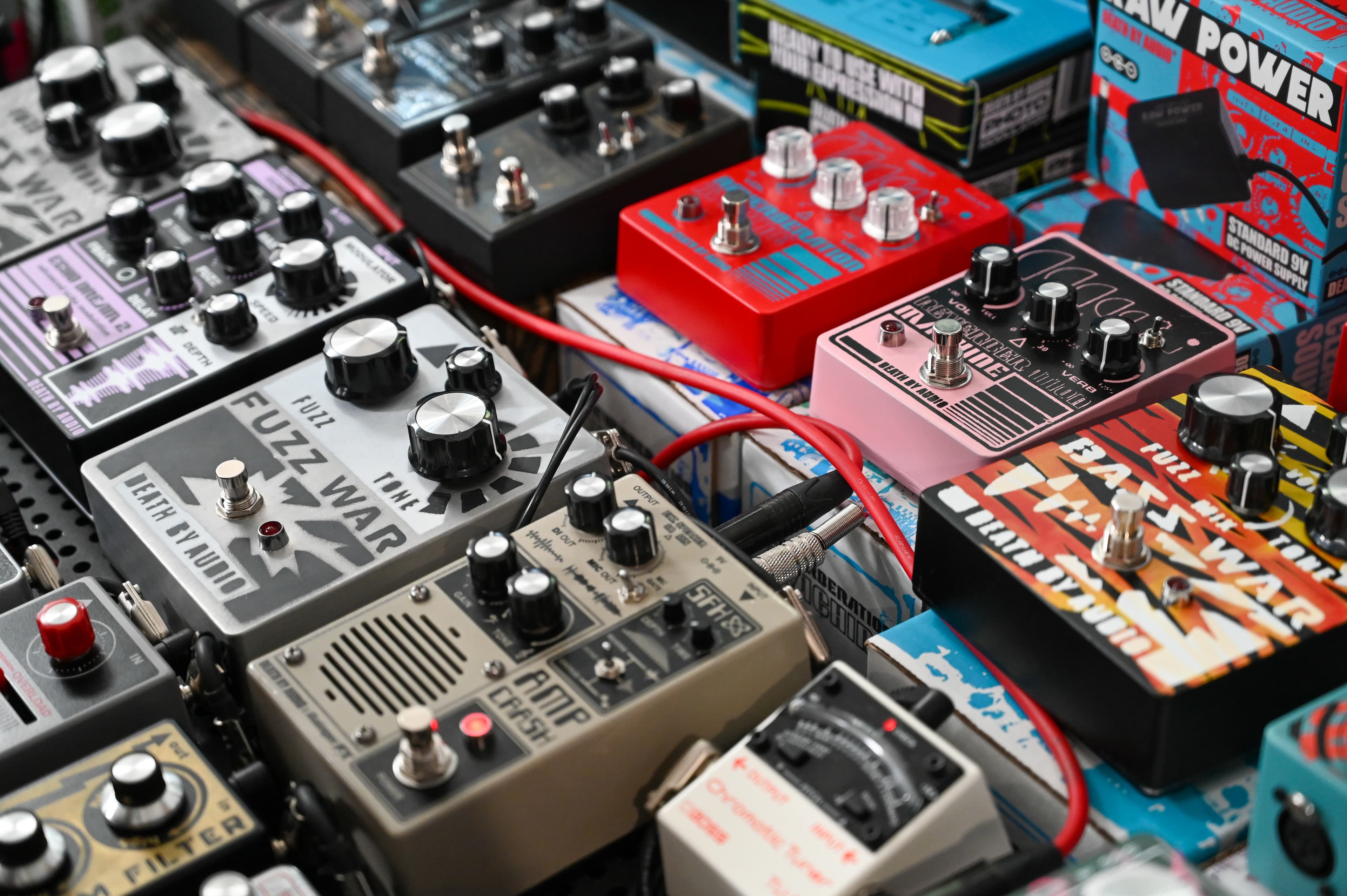
You get the Brooklyn Synth and Pedal Expo, where 110 vendors, from legacy producers to independent experimenters, came from around the world to pile into a Greenpoint event space with hundreds of thousands of dollars worth of musical circuitry. This year, the expo attracted more than 2,000 attendees over two days, its biggest yet. It marked the 15th anniversary since founder Paolo De Gregorio started the Stompbox Exhibit on the Lower East Side, back then as a pedal-only event to fund the organizer Delicious Audio’s precursor magazine The Deli. In 2014, a separate event was started to do the same thing for synthesizers, and since 2018, they’ve operated together.
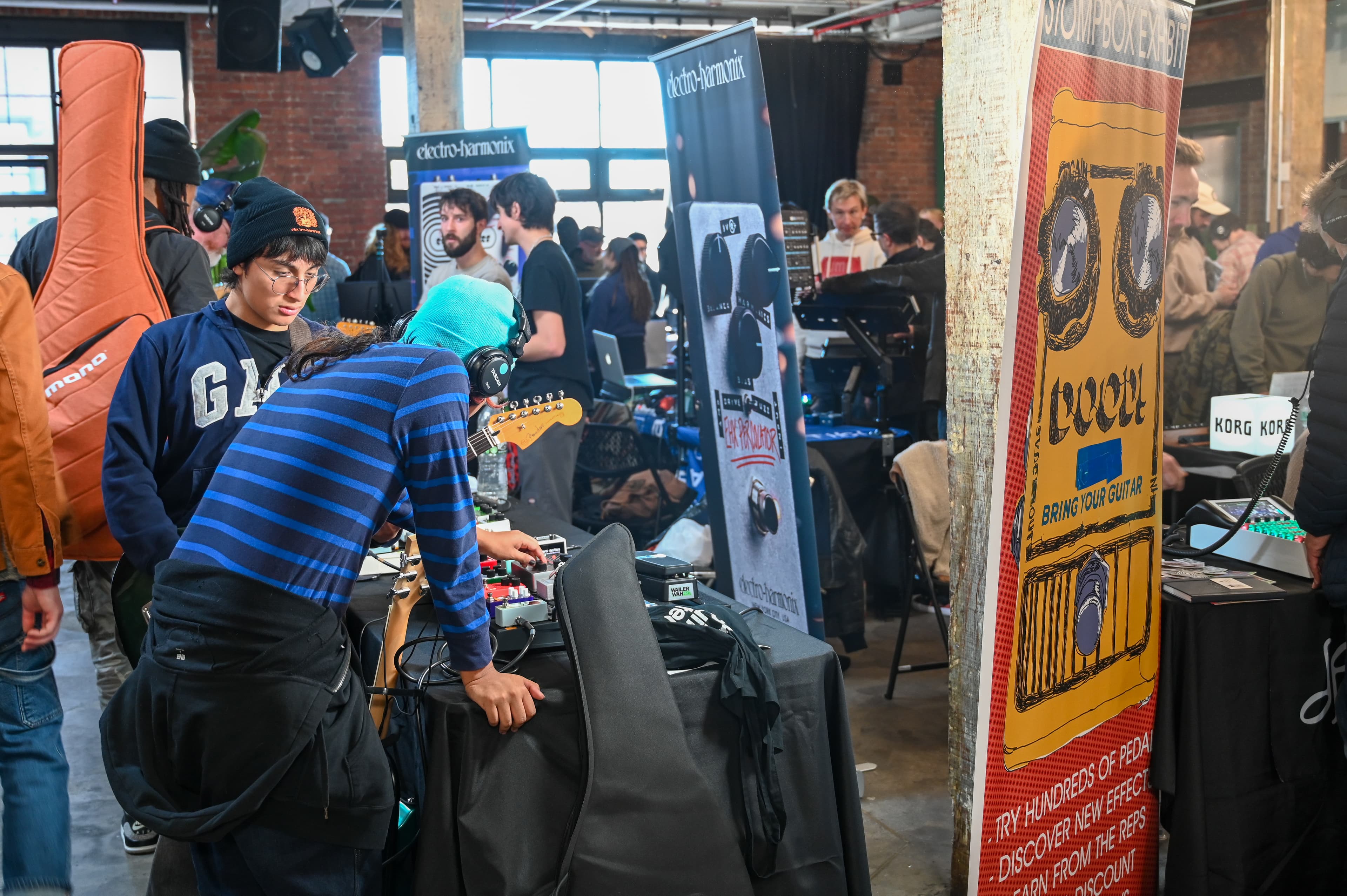
“[Synths and pedals] generate passion in a way that gear rarely does,” said De Gregorio, who has worked in the city’s musical underground since he moved to the United States in 2002 and even produced for Lana Del Rey in her Lizzy Grant years. He has since brought the expo around the world, with other events in Los Angeles, Portland, London, and Montreal. He said one of the expos’ main purposes is to connect enthusiasts with young musicians who are still exploring how gear can hone their sound. “Kids have more time to experiment with the machines,” he said. “They’re looking for inspiration.”
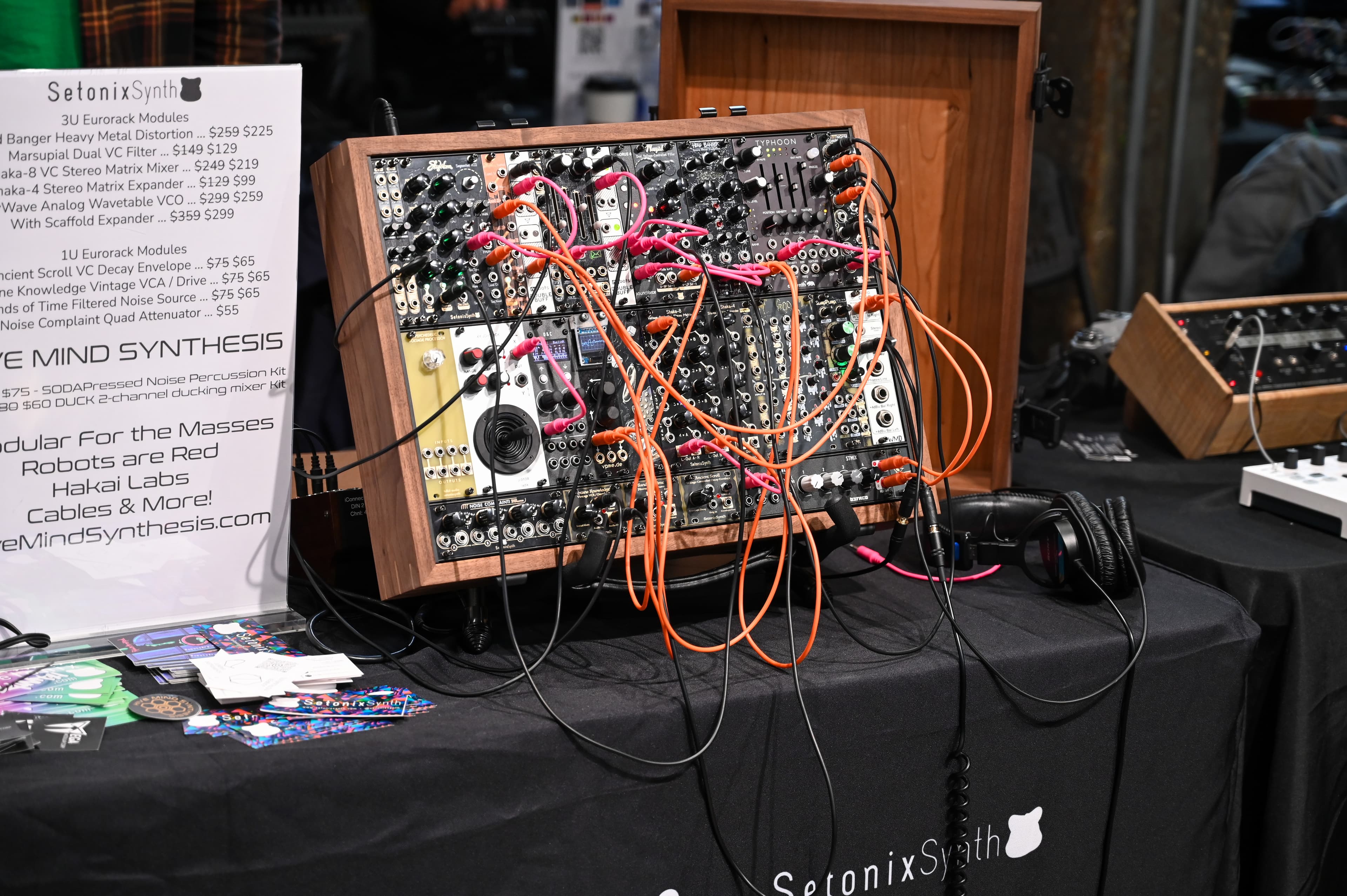
The inspiration on display mixed music and design. Some booths hosted massive Eurorack modular synthesizer setups, where dozens of components, like oscillators, filters, and effects, were patchworked together to create completely unique instruments. Others featured quirky, bespoke design objects, like motorized knobs and a “visual synthesizer” that modifies inputs from a webcam.
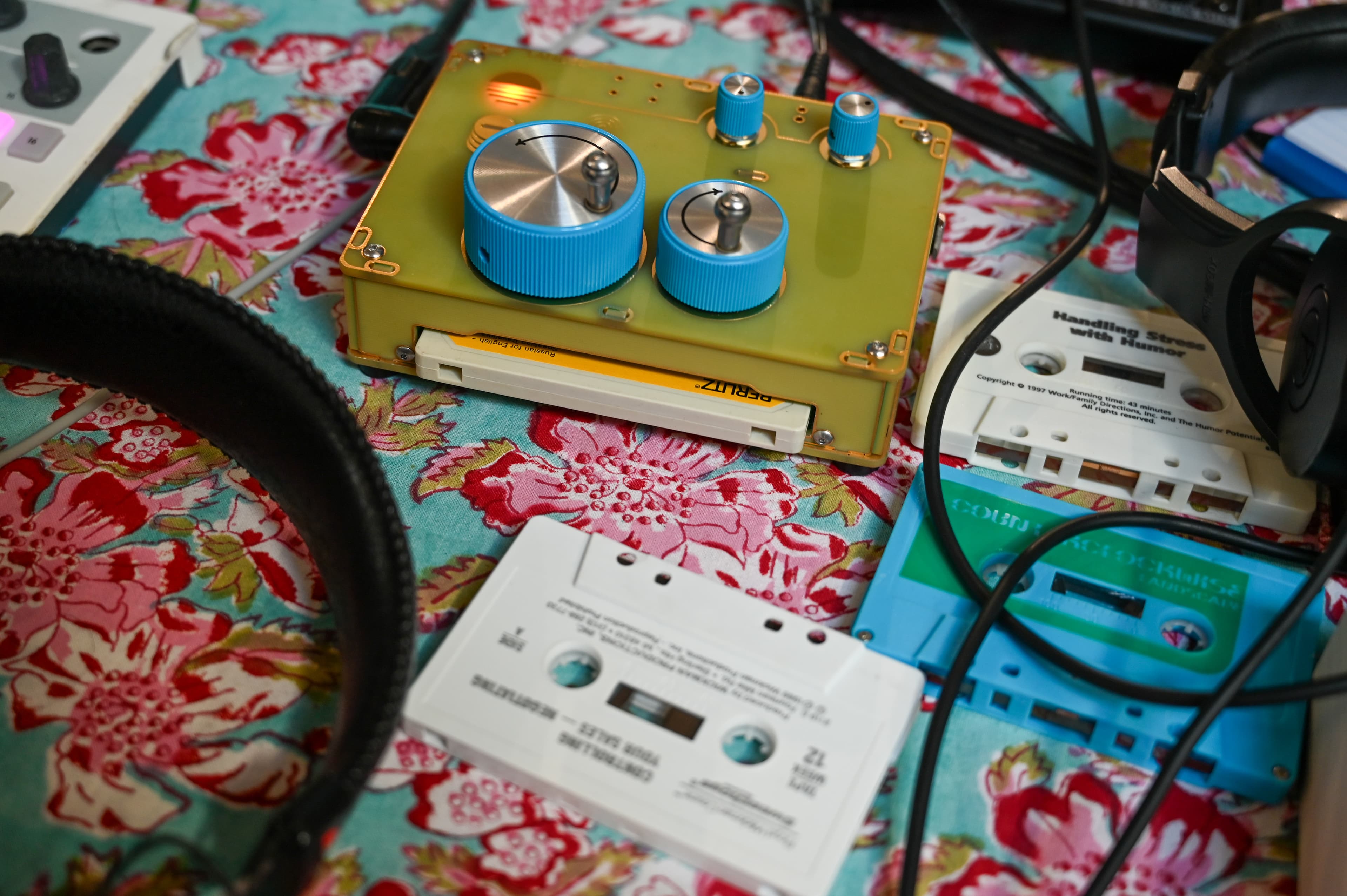
Brooklyn-based synth-maker Landscape brought the left-of-center philosophy to their instruments, which included skin-reactive panels, a spinning magnetic resonator that picks up frequencies from metal strings, and a machine that “plays” loaded cassette tapes like a DJ scratches vinyl. That instrument, the HC-TT, was founder Eric Pitra’s first, when in 2015 he was looking for a more human way to manipulate tape. He wanted to make something that “draws people in and stands out, but is also relaxing,” he said. On making other Landscape instruments, he said, “I feel like if it looks like it sounds, the design is done.”
Other designers were more consumer-oriented, like product engineer Jonathan Wang’s one-man DayDreamer project, which brings a six-oscillator, MIDI-controlled analog synth down to a—relatively—affordable $299 price point.
“I wanted a synth with all these features, but I didn’t want to spend a lot of money,” said Wang. He made it with friends in mind, designing the circuits and crafting the case from laser-cut wood for his first batch of 40 machines. It’s a side gig for him, a hobby, so he said he didn’t mind the significant amount of time he put into the project, since “they’re a pain to make.”
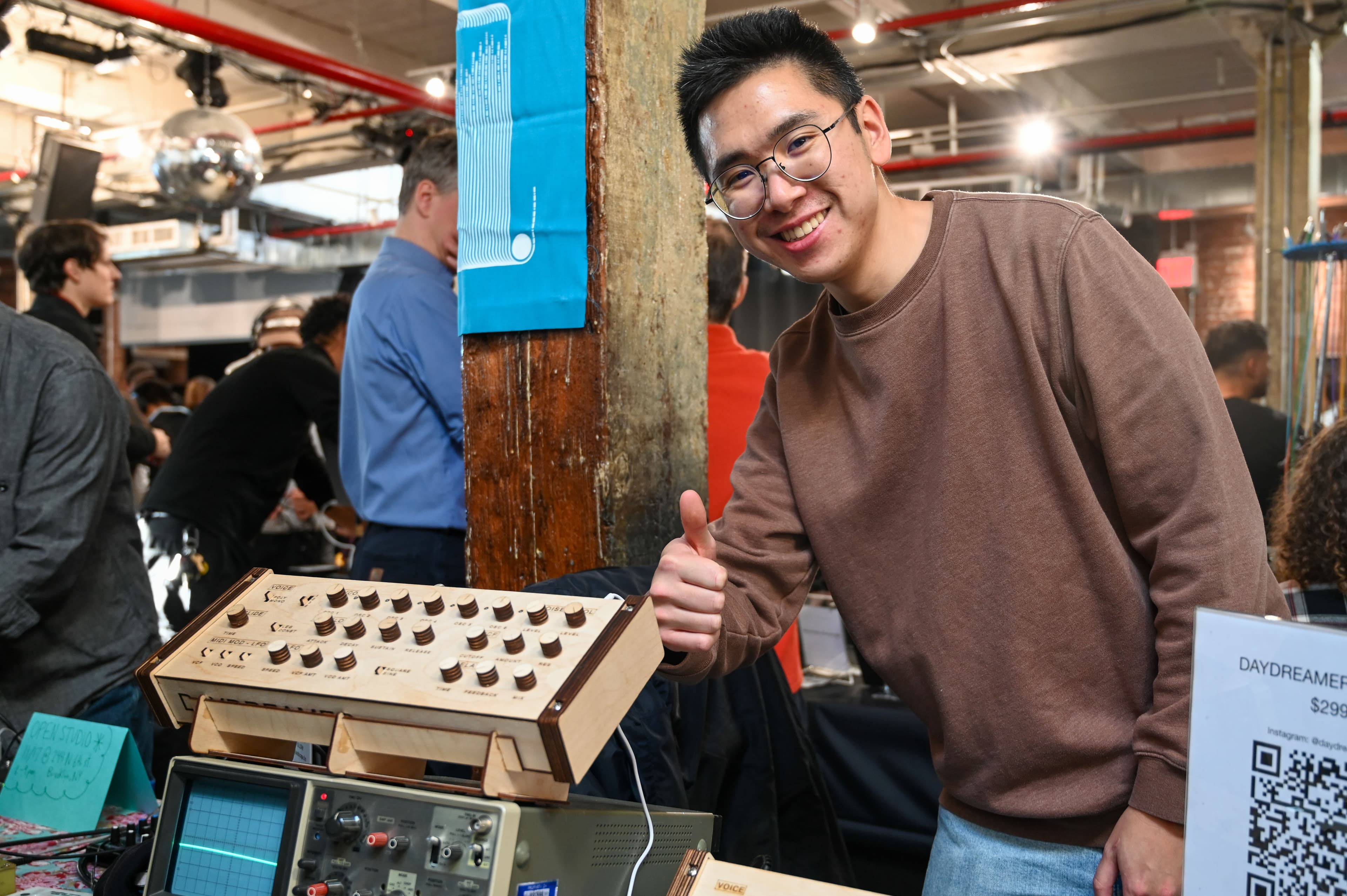
Because of the DayDreamer’s success, he brought his next generation of prototypes to the expo for feedback, including a similar instrument that won’t require a separate MIDI controller to play and an oscilloscope, which renders various synthetic waveforms on a circular screen. “It’s really just some math going on,” he said of the oscilloscope. “But it’s mesmerizing. People like playing with it.”
The accessibility angle was taken up by legacy synthmaker Buchla. The legendary Bay Area firm, founded in 1963 by early pioneer Don Buchla, has traditionally been associated with large, handmade, extremely expensive instruments, such as the flagship $4,999 Music Easel system. Today, their synths are mostly used by specialists and diehards, like experimentalists Floating Points and Kaitlyn Aurelia Smith.
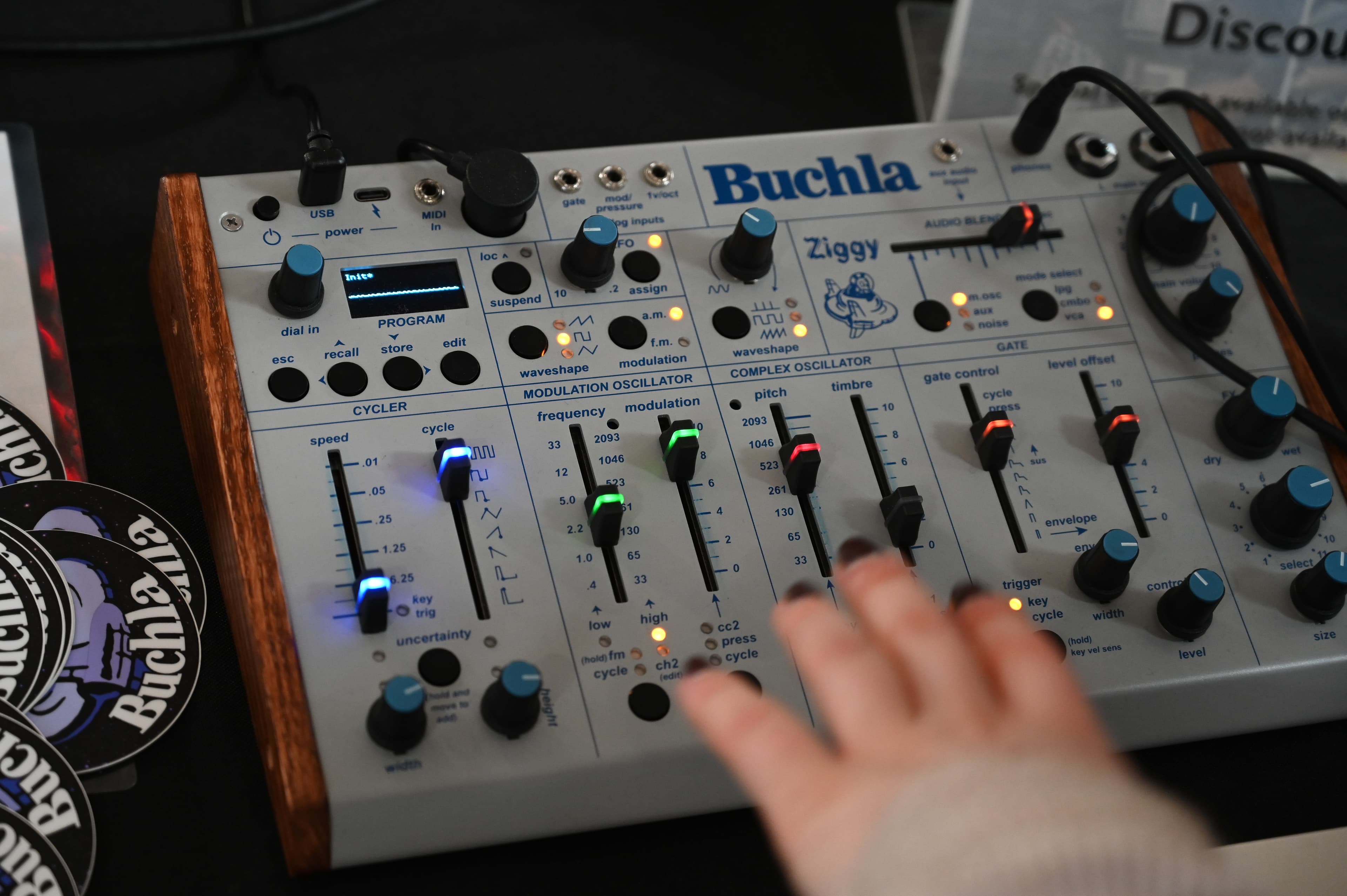
Often a “capstone” for a musician at the peak of their career, said Director of Sales at Buchla, the design team wanted to balance their “haute couture” impulses with a way to introduce new musicians to their signature sounds. At the expo, they showed off their newest instrument Ziggy. It isn’t handmade, but it features the hallmarks of Buchla, including its “complex oscillator,” which allows digital manipulation of analog signals and additive synthesis to push beyond recreating familiar tones. At a—relatively—more reasonable $999, the machine has already sold 1,000 units in preorders.
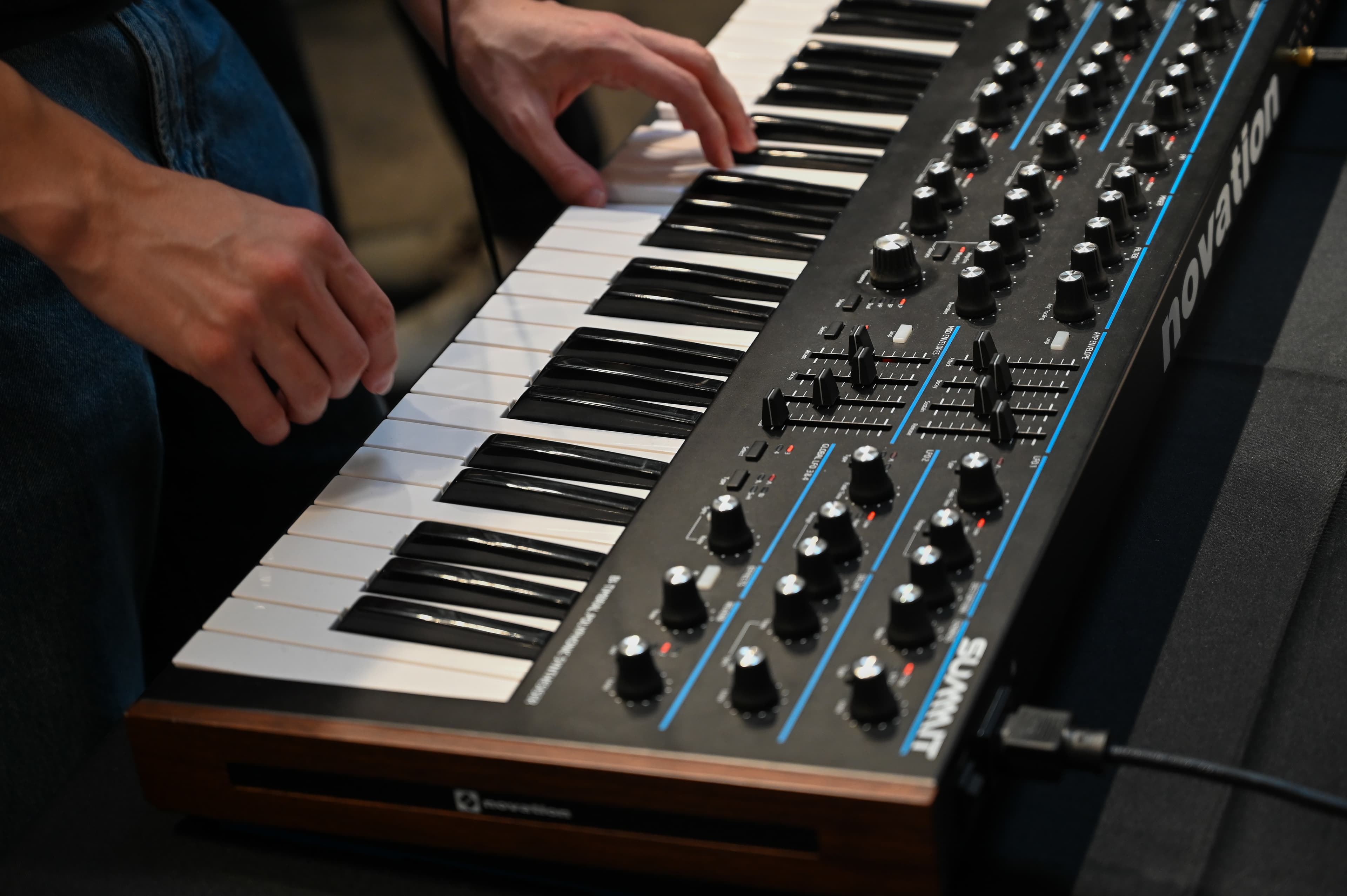
“It’s about getting Buchla instruments into the hands of more people,” said Kwas. Still, he defended the company’s general commitment to the handmade, slow-to-produce ethos, saying it provides relief to the negative consequences of optimization and digitization. “In this era of AI and hyperscaling, the things that are unquantifiable are being forgotten as everything else is quantified,” he said. Playing a handmade instrument makes you “feel connected to the person who built it.”
It’s a spiritual defense of the gearhead impulse—the belief that every musical problem can be solved with the right tool. There were plenty of tools to test at the expo, and the belief was on full display, as hundreds of people hunched over rows of sci-fi machines, smiling at the sound in their headphones, or maybe just the simple pleasure of turning a good knob.