
Arts
The Metropolitan Queer
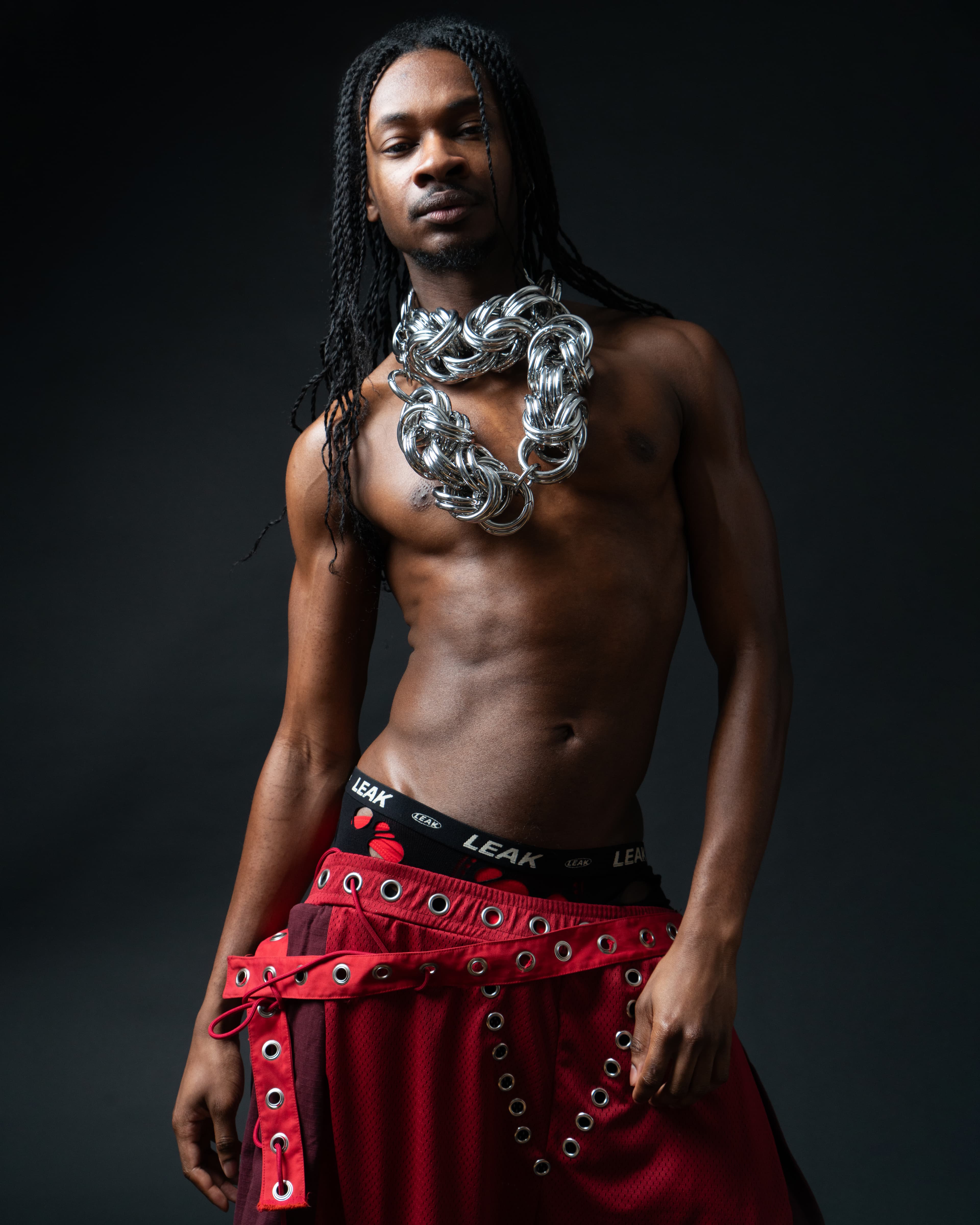
The multidisciplinary artist on Fire Island politics, the psychology of kink, and how community influences their paintings.
April 30, 2026
TANNAR: For the record, it's me, Tannar, on the interview. I know Moses from our time on Fire Island. We met while we were postering the boardwalk in the Pines for different parties, Moses for Boffo and me for the Ice Palace, making sure everybody knew about the underwear party. My first question is what are steps one, two, and three when you're charming someone you feel connected to?
MOSES: I don't have three steps. When I'm charming somebody I have to gauge the situation, whether that be a bar or the street or an event. Definitely eye contact. I lead with confidence, I have to for sure.
TANNAR: I've always felt a very warm confidence from you. It's never felt arrogant. It's always been very comfortable.
MOSES: I have been rejected a lot but every time I'm accepted it's because I went out of my way to try something or go after what I wanted. And it has given me some beautiful passionate yummy times because I actually went out of my way to do it. Leading with confidence is the only way for me to do it right and do it successfully. So I think that's the only step to charming somebody really. Leading with confidence and being yourself.
TANNAR: When in your life do you feel like you first found that kind of confidence that lives in you?
MOSES: Somewhere around high school and college. I wasn't really able to express myself until I went to an arts magnet high school and with time I grew more comfortable with myself, being around other artists, being around other queer students. I was able to find community luckily in high school.
TANNAR: Where did you go to high school?
MOSES: I went to Pinellas County Center for the Arts in St. Petersburg, Florida at a school called Gibbs High.
TANNAR: You've been all over the East Coast right?
MOSES: Yes. I went to art college in Baltimore at MICA. In college I was wearing what I wanted, dressing how I wanted, experimenting a lot with my look and going out of my way to meet as many people as I could. A lot of that took confidence that I had to really build within myself. I may have been scared but I pushed myself and then it felt natural after a while.
TANNAR: We're all glad that you did. So where is home to you now?
MOSES: That's a fun question because I've moved around so much. I would say home is a mix between New York and New Jersey. I rest my head in New Jersey but I am in New York every single day. All my friends are here, my social life is here, my work is here. New York is my home. I was born here. In Manhattan.
TANNAR: Period. A city person through and through. Where do you like to go out?
MOSES: I like to go to raves and I like to go to gay bars. I'm a little more liberal when it comes to the gay bars, I just like to be around people, around queer people and gay people and just vibe. But my preference is a rave and I have to build up energy to go to one, like once a month or once every two months.
TANNAR: How do you build up that energy? We were both working on Fire Island and trying to enjoy our lives in such a beautiful fun party place at the same time. How do you budget your energy and your time?
MOSES: I say no. When I was on Fire Island it was very hard to balance work and party life because there was always something new happening every weekend. But those aren't necessarily the places I would go to if I was in the city because most of those people aren't fab. They're fun, they're salacious, but they're not fab. And most of the fab people are in Brooklyn at a rave, coming from all walks of life, bringing their fashions, expressing themselves in ways that I align with more. On Fire Island it's less about that. It's leisure, it's fun. But there are politics, different types of politics that go on in that nightlife scene.
TANNAR: There are so many layers to that place. Do you feel like you hop between the different layers or do you try to stay in one?
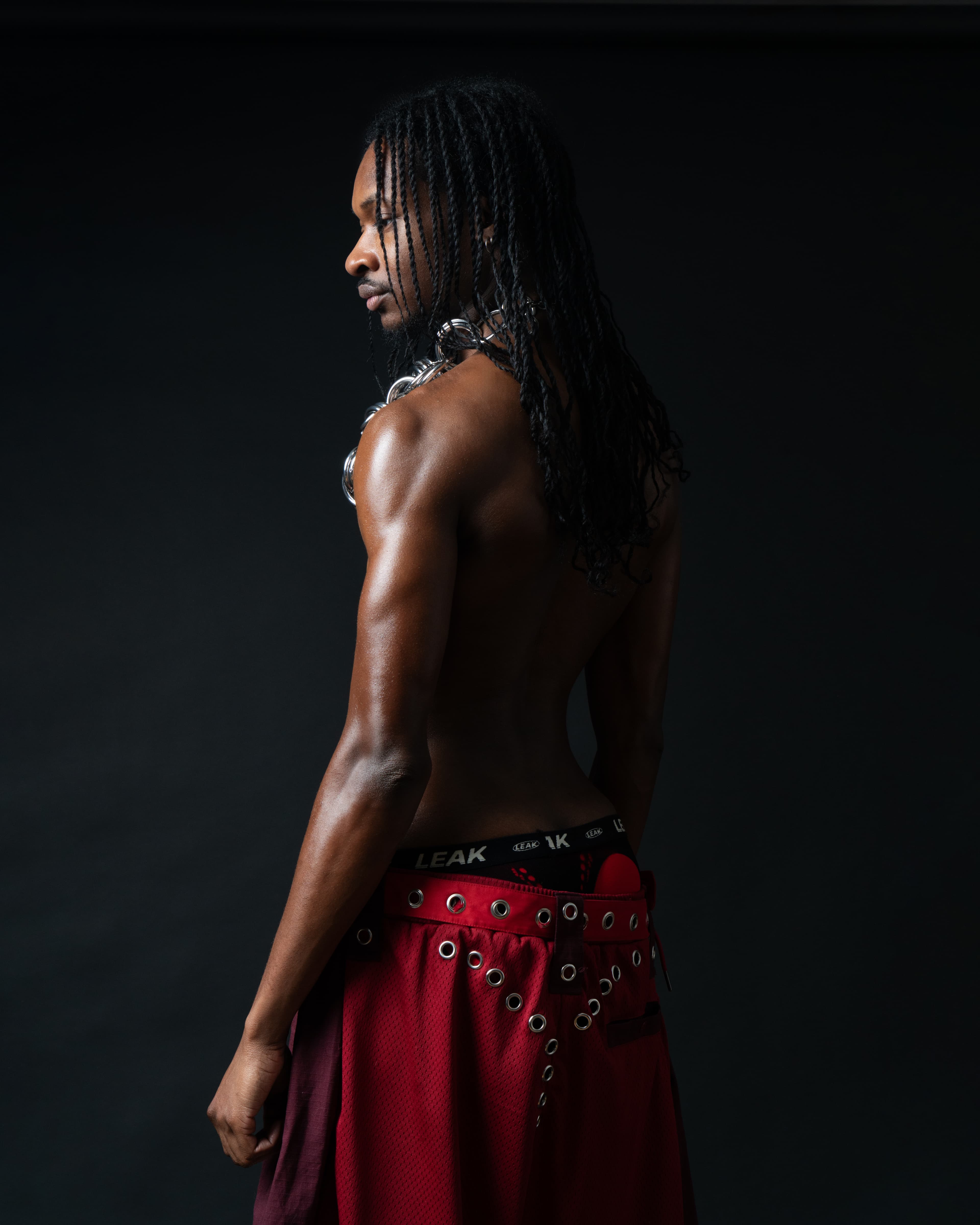
MOSES: Having lived and worked there it felt like I was feeling every single layer every single day. Whether it had to do with my identity as a queer Black person or my socioeconomic position as a worker there versus a vacationer, I was constantly feeling all the weight of that. Feeling sexy but also feeling fetishized. It was just so many different layers, and then you had this beautiful nature as the backdrop of all of that. I had to find community and I had to find peace in my own ways.
TANNAR: The beautiful nature is such a bizarre backdrop for a place like Fire Island where it's absolutely the most chaotic and some of the most stressful points in my life but then also the most quiet and serene with not even a car driving by.
MOSES: The moments of solitude were very beautiful to me, just as beautiful as meeting some guy from some foreign place I'd never been to, the moments I spent by myself just embracing the ocean, embracing the bay.
TANNAR: That's why it's hard to explain to people who are curious about Fire Island. I usually say it's all the bad things you think it is but then numerous numerous things on top of it. Do you ever try to explain it?
MOSES: When I explain it to people they don't really understand my perspective. I try to explain it very similarly, that all the bad things they believe it is are true but it's also what you make of it. Because I had to make my own experiences out of it. And it was different for us too because we spent a lot more time there than the average person. For a stretch of time it was essentially a second home. My perspective shifted because sometimes I would feel very stuck since it's an island but I would also feel the joy of meeting new people, having trips, having a little life somewhere.
TANNAR: I'm so glad I got to see your exhibition at the Carrington House. That was so lovely.
MOSES: For Black Pines, the exhibition I had on Fire Island, a lot of that was about the friends I made, the Black people there. There were only so few of us, especially the workers. So it was just me and two other friends. Some of the work was about just us living, just being. Some of the work was about romance. For that specific show I wanted to highlight Black lives on Fire Island and this beautiful leisure that we go through, highlighting the natural beauty in the landscape of the Pines. It's a very common tradition for queer artists. We use different lovers and experiences and capture them on the canvas or in video, in photography, poetry. In most of my work I get a lot of inspiration from queer life, from romance, from sex.
TANNAR: How do you decide what pose to paint them in? As a photographer I'll run around and take a million pictures of you but you've got to pick one pose and commit to it.
MOSES: I have one painting called Angel where the pose is a very Venusian pose, a nude reclining. That's a very common art historical pose but the image itself is very contemporary. I try to make it contemporary with the setting and with the subject. I never really saw many Black and brown people in this type of pose in painting and I wanted to have this very gay sensual painting. When I think about modeling people or lovers I try to capture them in a very natural or relaxed state. I love the post-coital body, that release, that relieved aesthetic. Just reclining.
TANNAR: It ties back to the confidence. There's something relaxed and confident about what you're describing, that post-nut-clarity of being in tune with your body and your soul.
MOSES: And the painting is supposed to hold onto the memory of that. I find that a lot of queer sex and gay sex can move very fast and you can sort of forget or move on very quickly. I guess that's hookup culture in general outside of just gay life. But I wanted to, with my work at least, hold onto a lot of the memories and the beautiful moments I've shared with somebody.
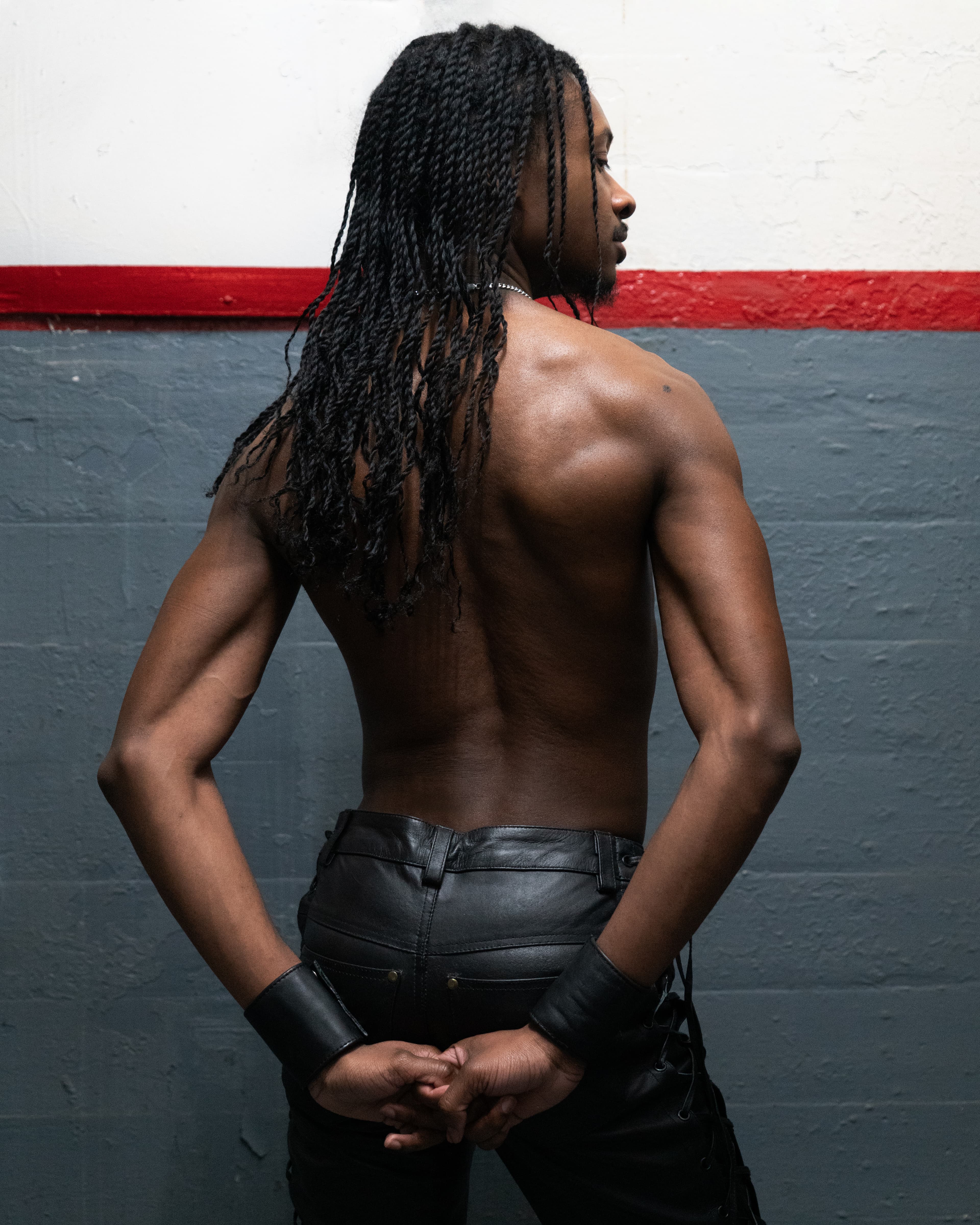
TANNAR: How are we feeling in this new look?
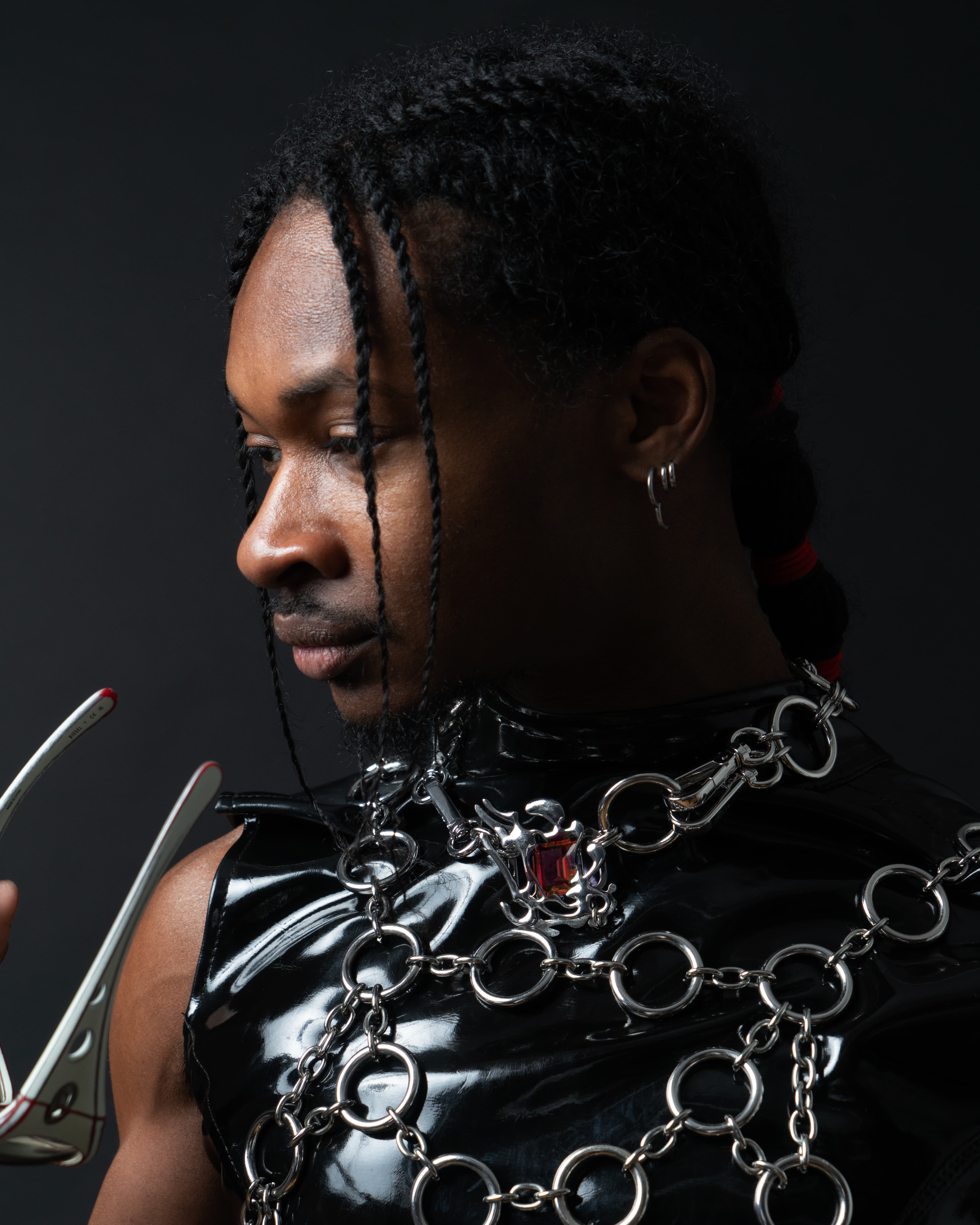
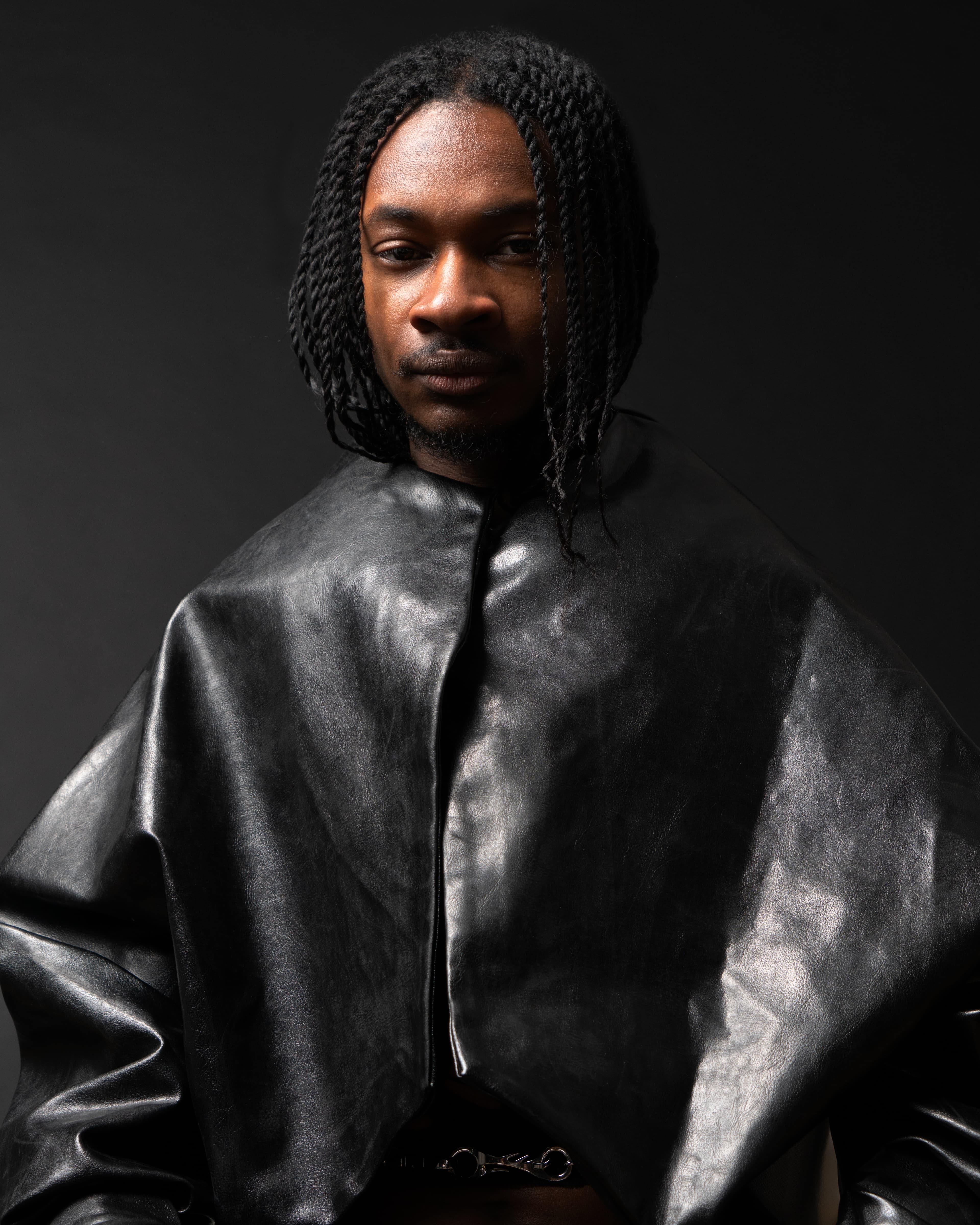
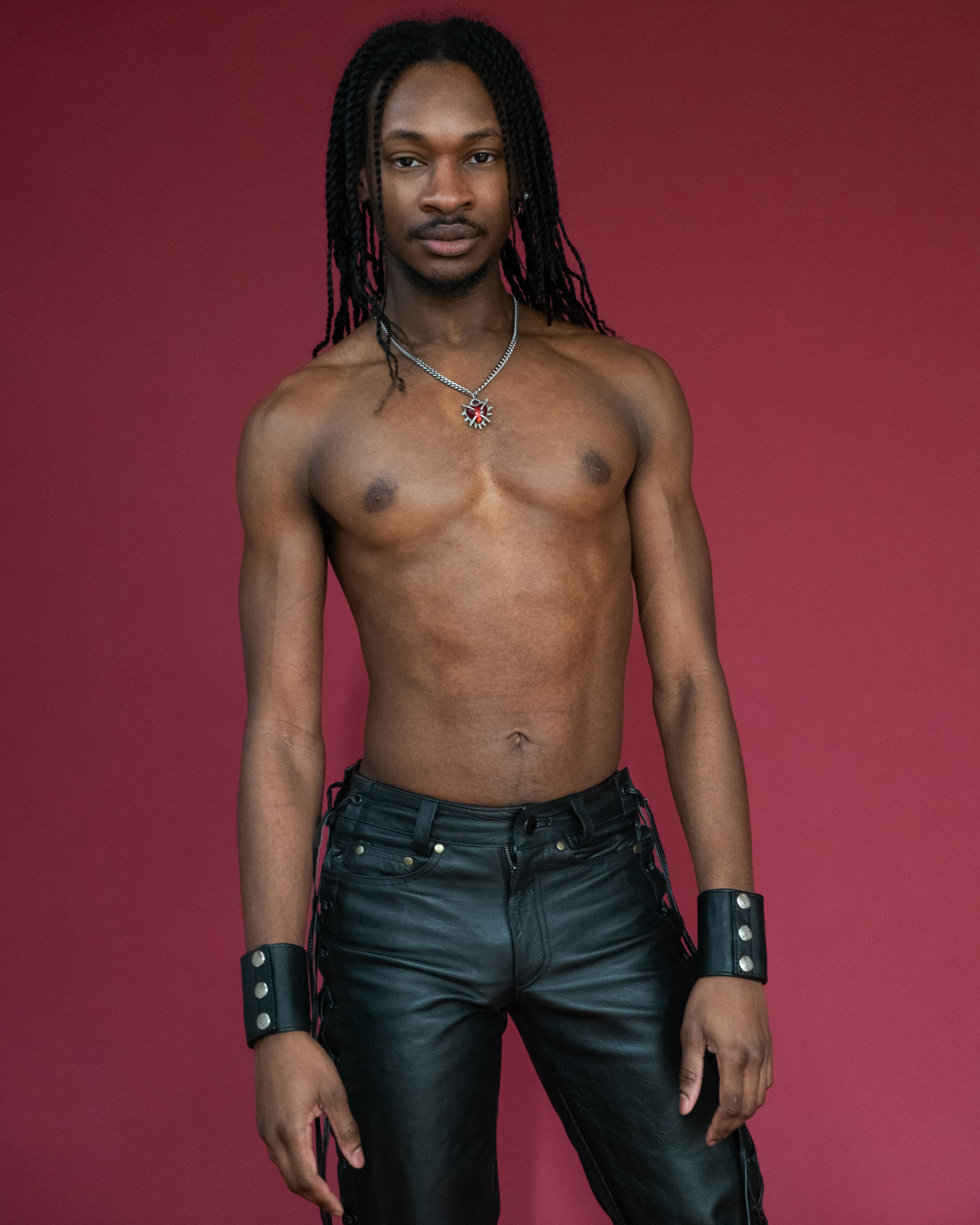
MOSES: I'm really fucking with it. I'm in leather which I always like and I feel dark. I feel mysterious. I'm in my element.
TANNAR: Very mysterious, very powerful. What is it about leather that draws you to it?
MOSES: As I started to explore myself more sexually the places I would go to, the Eagle, kinky muscle daddies, I would just be around a lot of leather. After a while I started to like the smell and the feel on my body and realized it was something I enjoyed in my wardrobe even casually.
TANNAR: What is your favorite dark room in the city or elsewhere?
MOSES: Any dark room that I'm in.
TANNAR: Paint me a picture. Draw me a map of a dark room and where you are in it.
MOSES: I can think of one immediately which is the one we saw on Fire Island in the Ice Palace, where the underwear party was literally just an excuse to go there and see what's going down. If everybody acted correctly it was just a great experience of multiple bodies, warm bodies, next to each other. I think a proper dark room has a nice dim light and is not completely pitch black. I associate the pitch blackness with shame.
TANNAR: Dim for sure, we don't need fluorescent lights. What about fog or haze?
MOSES: That's sexy as well, but at least I know who's touching me. I like to know who's touching me. Some people don't and that's okay.
MOSES: I'm actually circling the dark room. I am very particular about the kinds of people I'm interested in or sexually attracted to. I have a broad taste but there are specific things I'm looking for when I'm engaging with someone sexually. Big ass, thick thighs, warm eyes, sometimes seductive eyes. I like facial hair. More often than not a thick juicy ass, some thick juicy thighs, some mass. More mass than me typically. I have a David and Goliath kink kind of thing. I'm taking somebody down.
TANNAR: Talk more about that.
MOSES: I was thinking about the psychology of kink the other day. A lot of the time, I deal with people who have high-stress jobs or jobs that require a lot of people attending to them, people who just need a release and need to let go. My life is chaotic but I feel like I don't have that much control. So when I'm in the bedroom I love control, I love seeking control. And a lot of the times other people want to let go and want to submit.
Continue reading on Substack
Full Article →