
Arts
Here, There, Everywhere: Greater New York 2026
The state of the city–and its art–is presented at MoMA PS1's ambitious survey as an interdependent network of overlapping relations, written by Rob Spring.
April 24, 2026
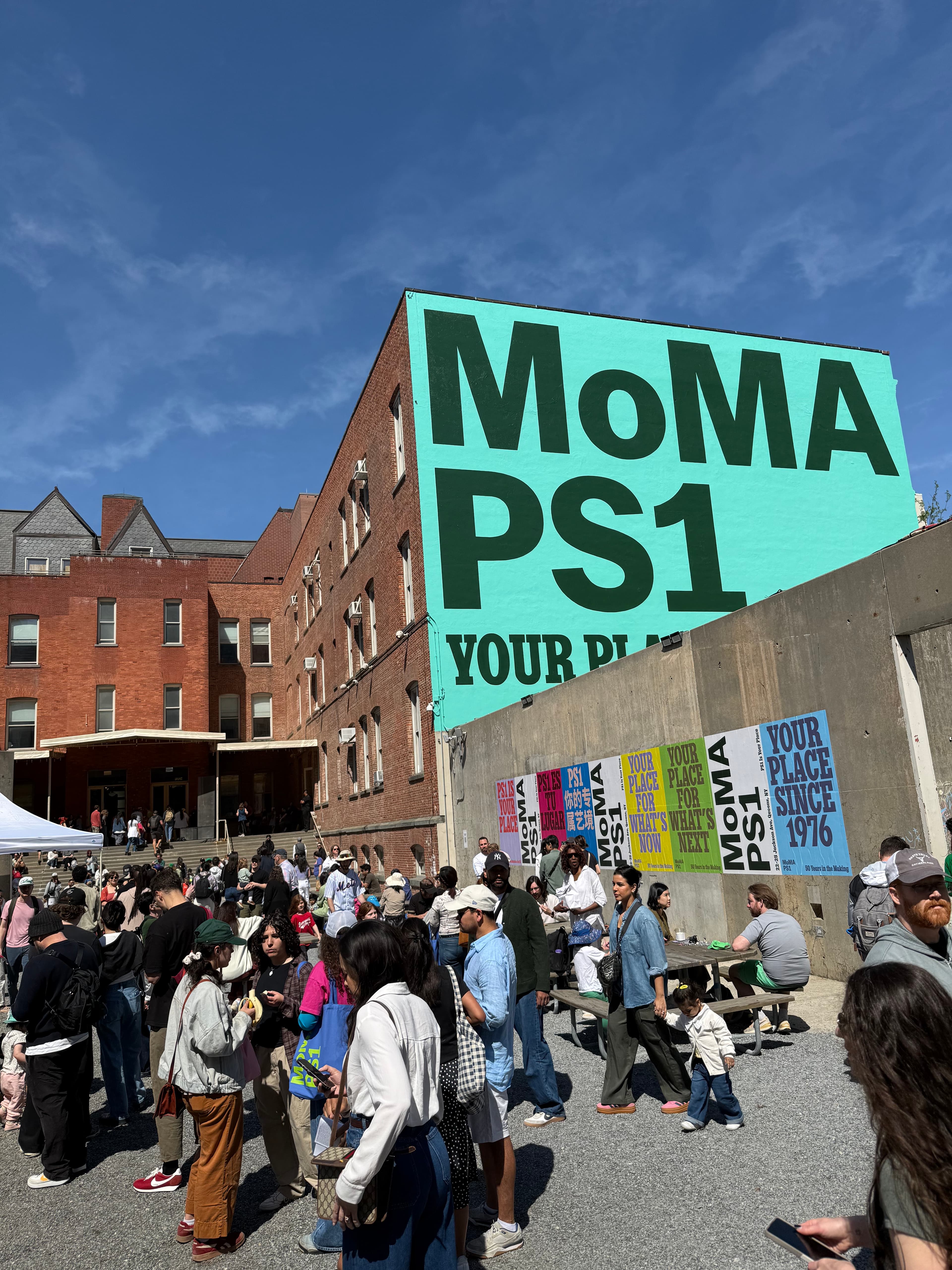
Mounted every five years at MoMA PS1 in Queens, Greater New York brings together a survey of artists living and working in and around the city. The curators of this edition, a team led by Connie Butler and Ruba Katrib, leave no stone unturned. The characters are familiar; they are club-goers, sex workers, the NYPD, your favorite tía, tradesmen, protestors, immigrants, rats, and pigeons. The city is not merely a backdrop, but an ecosystem that thrives on interdependence and the negotiation between its many forms of life. The themes are equally familiar; community, labor, proximity, systems of meaning, surveillance, autonomy. These are not disparate concerns but overarching conditions under which the whole is continuously remodeled by the shifting relation of its parts. Even at its heaviest moments, an air of persistence permeates the exhibition, extending down to the level of individual works. Like the city itself and those who inhabit it, Greater New York, in its sixth edition, is less about representation and more about relational systems of life.
What follows is a movement through some of those systems, by no means fixed, but serving as points of overlap within the exhibition's interdependent structure.
The Block
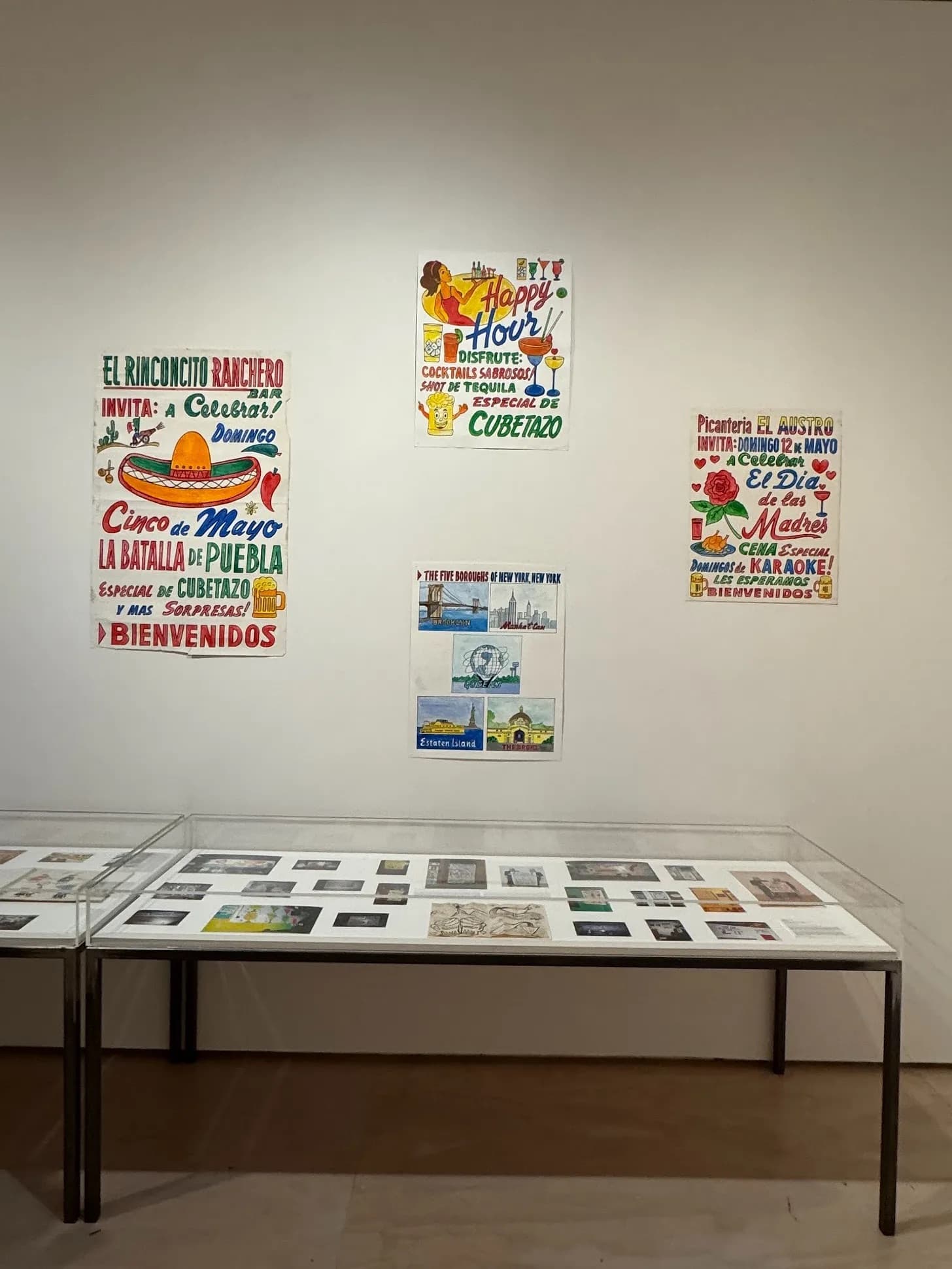
For the past 50 years, the Ecuadorian-born Cevallos Brothers have created posters for local businesses and eateries, mostly in Spanish-speaking corners of Queens, so ingrained in daily life that they often go taken for granted. Given new life on the walls of the museum, these lively, colorful, and dynamic vernacular artworks remind New Yorkers that art is all around us, and that AI cannot generate the feeling of connection and local community that binds this city together.
In the same room, life-sized papier-mâché sculptures by Piero Penizzotto also depict the quotidian New York experience. In The Council of las Tías (Mary, Milagros, Cynthia, Nereyda) (2026), four women sit in fold-up camping chairs, rendered in a style reminiscent of claymation, with gestures and expressions that bring the tías to life. Their presence is undeniable and the term "council" is apt. You can almost hear them conversing and laughing, presiding over the block and dishing neighborhood gossip as you turn the corner. The scene would not be out of place in locales like the streets of Washington Heights, or Flushing Meadows Corona Park.
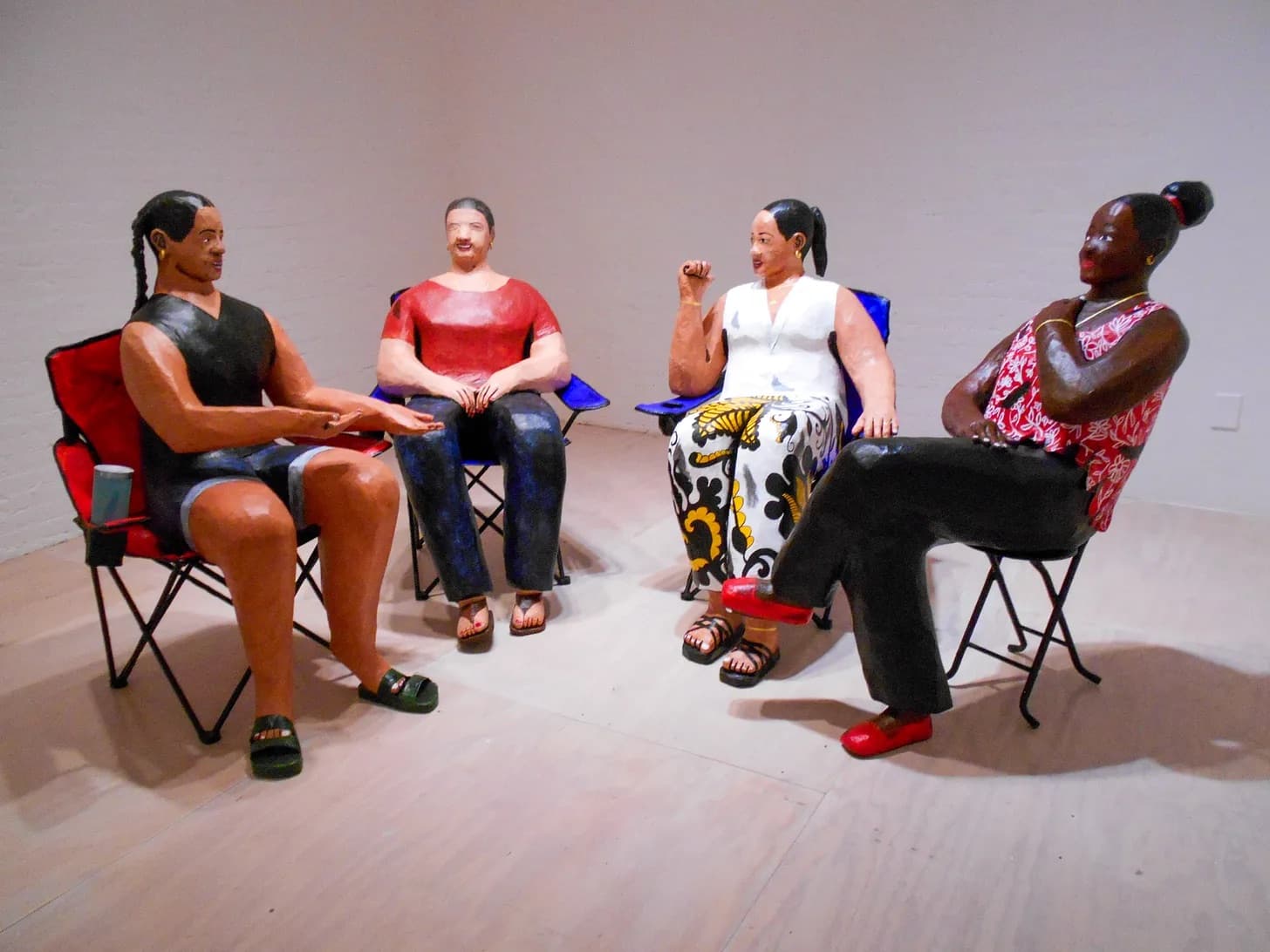
Piero Penizzotto, The Council of las Tías, 2026
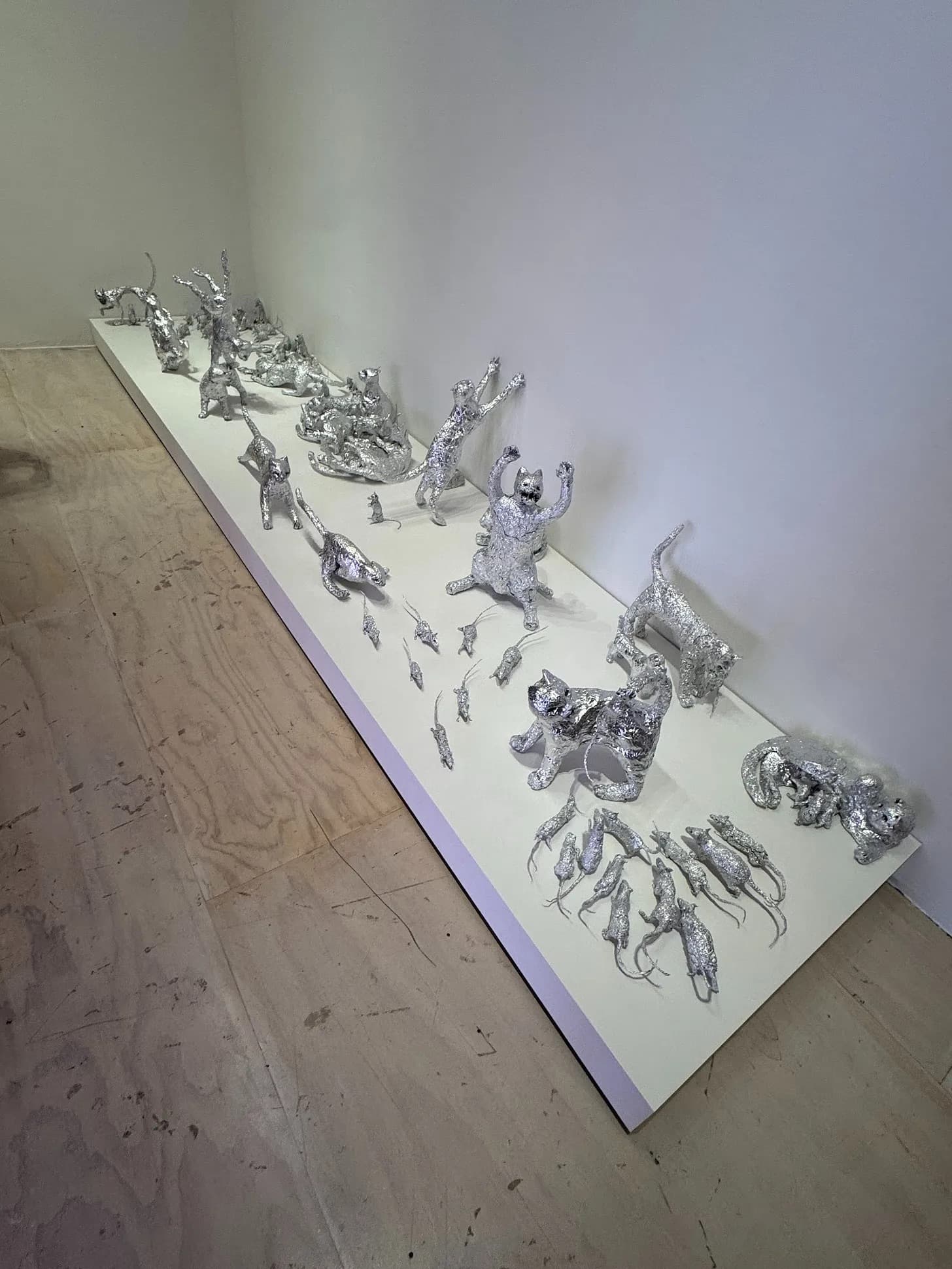
"The rats don't run this city, we do," proclaimed then-Sanitation Commissioner Jessica Tisch (now Police Commissioner) in a press conference that could have been scripted by the writers of Saturday Night Live in 2023. The ongoing battle with the city's infamous beasties continues in the form of aluminum foil in Dean Millien's sculptural ensemble titled Cats and Rats (2026). With a sense of childlike imagination, Millien had created a scene that, upon closer inspection, speaks to the trials and tribulations of coexistence in one of the most densely populated cities in the world.
Photographs by Rachel Handlin act as punctuations in her explorations of the city's streets. In a series capturing rearview mirrors, described by the artist as "interruptions," Handlin captures two views in one, looking both forward and back. By placing herself at the center of this optical experience, Handlin, the first reported person with Down syndrome to earn both a BFA and MFA, defiantly claims her place both on the street and as an artist.
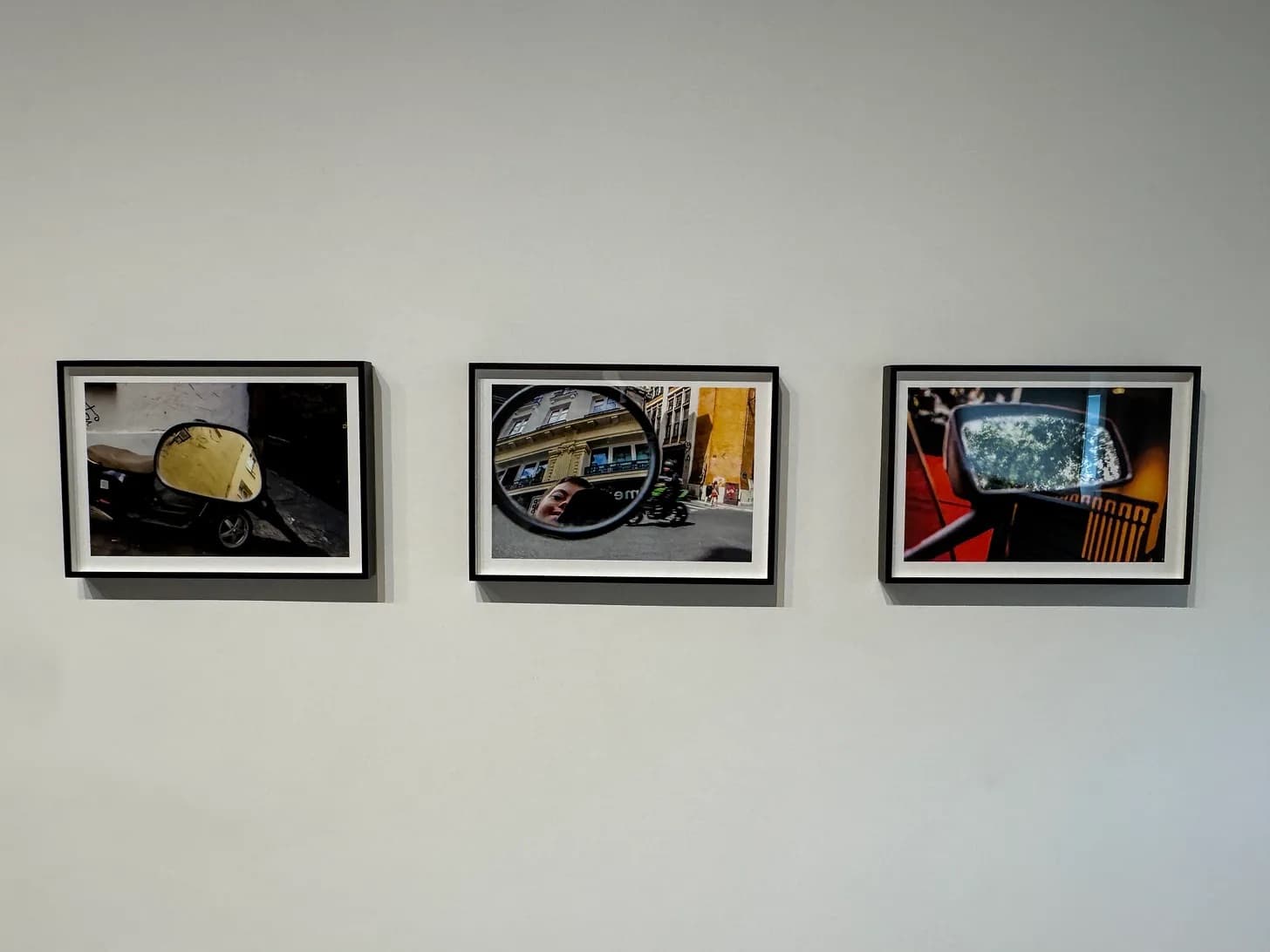
Rachel Handlin, Untitled (2018).
Hustle
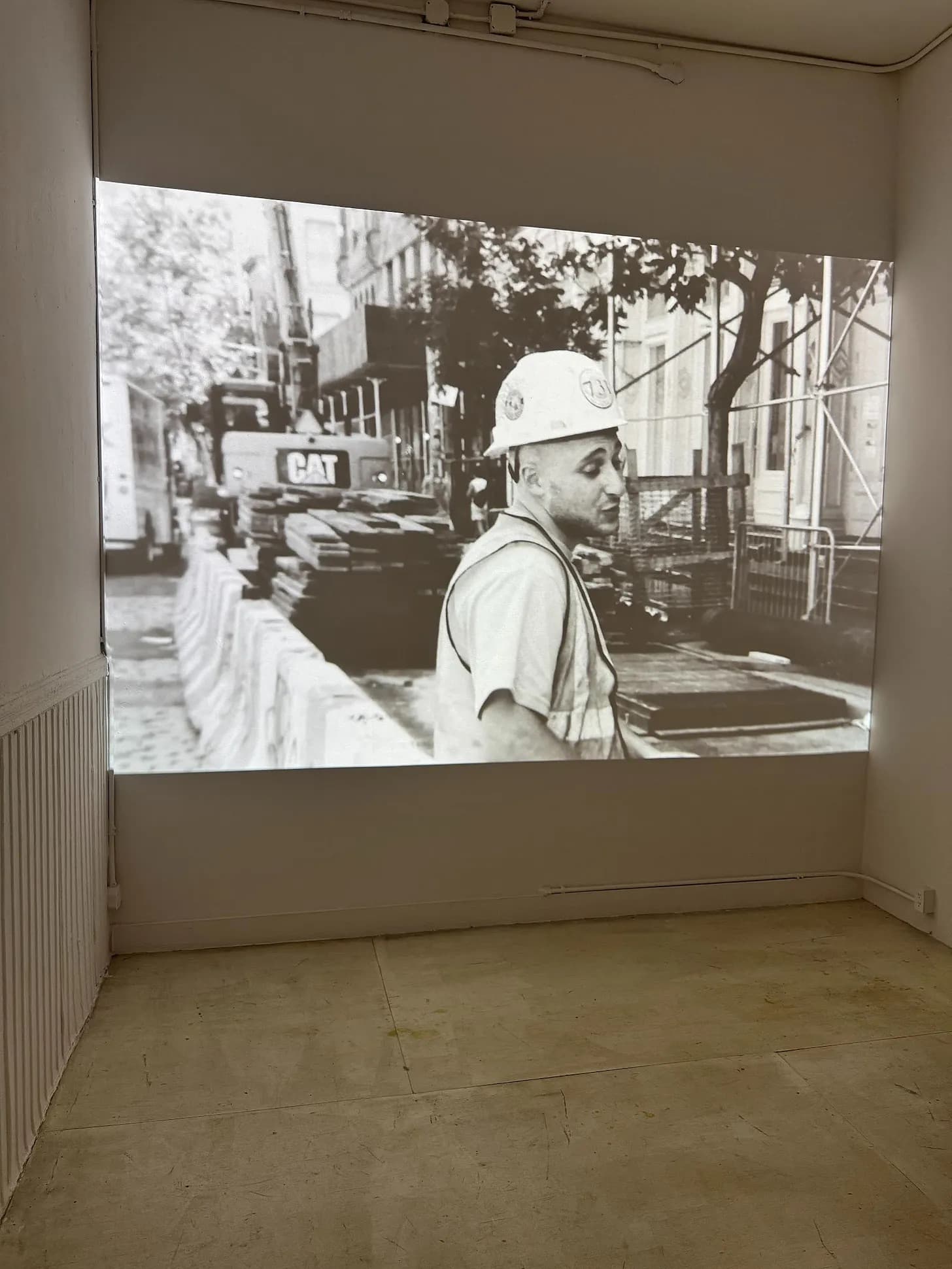
French-born Marie Angeletti has taken photographs of construction workers over a ten-year period, now presented in a slideshow titled Men at Work (2026). In her interactions with her subjects and through the act of portraiture, Angeletti disrupts and engages preconceived notions of this particular brand of masculinity. Ultimately, the effect is humanizing, reading like a lesson in relational aesthetics à la Mierle Laderman Ukeles' performance Touch Sanitation (1978-80), in which the artist shook the hand of every New York City sanitation worker and thanked them "for keeping this city alive."
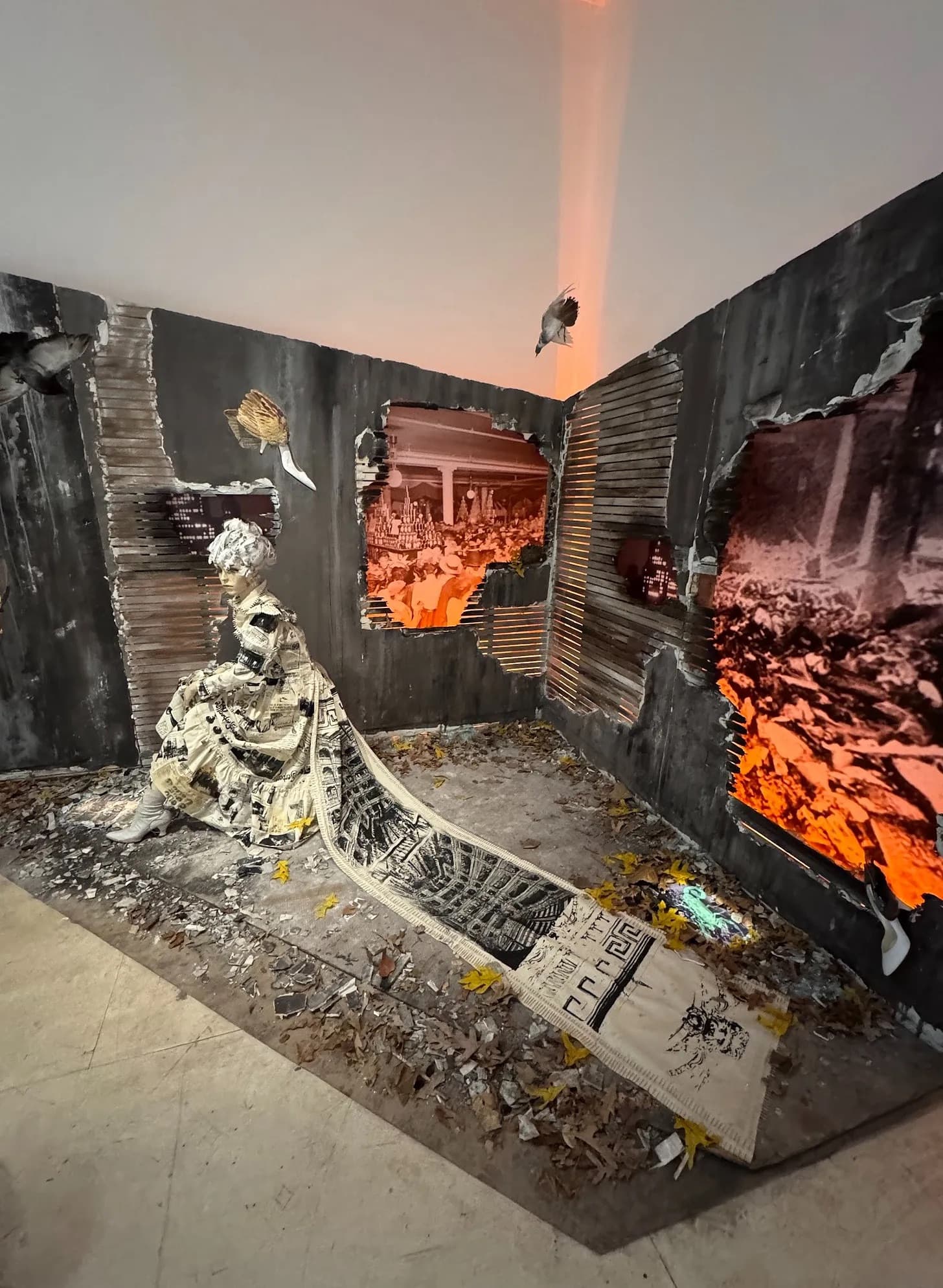
Women's History Museum, founded by Mattie Barranger and Amanda McGowan in 2015, uses fashion to challenge assumptions of femininity, labor, and history. Chez les heureux du monde (2026) is a diorama-like installation set among the rubble and ashes of the Triangle Shirtwaist Factory fire of 1911, resulting in the deaths of 146 garment workers, 123 of them women and girls. The newsprint dress presented here is a collage of references to the fire itself, John Galliano-era Dior, Schiaparelli of the 1930s, and nineteenth-century suffragette protests. The work is a nod to New York's importance in the fashion industry dating back to the industrial revolution, but also a monument to the victims of exploitative labor practices perpetuated by corporate greed.
In the museum's first-floor Homeroom project space, a poignant presentation titled Touch the Heart by the collective Red Canary Song brings visitors into a Flushing dim sum restaurant serving up zines, body and migration maps, and kinky accessories alongside posters, paintings, and drawings. The "grassroots collective of migrant massage workers, sex workers, and allies of the Asian diaspora" provides mutual aid and advocacy through oral history, cultural programming, and policy work. The installation at PS1 is an intimate look at migration, care, community, body politics, labor, grief, heritage, economics and autonomy in all its forms.
...
Greater New York 2026 is on view at MoMA PS1 through August 17. 22-25 Jackson Ave, Long Island City
Rob Spring is a native New Yorker.
Continue reading on Substack
Full Article →